

Using PayID for Online Pokies in Australia
Explore using PayID for online pokies in Australia 🎰. Learn how it works, benefits, security tips, and legal considerations for Aussie players 🦘💳.
Edited By
Charlotte Graham
PayID is quickly becoming a popular choice for online casino transactions in the U.S. Its appeal largely comes from simplicity and speed. Instead of juggling long account numbers or card details, you use an easy-to-remember identifier—often your email or phone number—to send and receive payments.
This convenience doesn't come at the cost of security. PayID uses underlying banking infrastructure like ACH transfers, which offer strong encryption and buyer protections similar to what you'd expect from major U.S. banks. This means your deposits and withdrawals at online casinos are both fast and safe.
Setting up PayID is straightforward. You usually need to register your chosen identifier through your bank or a payment platform that supports PayID, such as Zelle or certain mobile wallets. After linking it to your bank account, you can start making deposits to online casinos that accept PayID, often within minutes. Withdrawals tend to follow the same quick timeline.
One important point: not all online casinos support PayID yet. It’s a good idea to check ahead so you aren’t caught off guard during signup or when cashing out your winnings.
Using PayID means you avoid sharing sensitive banking info on casino sites, reducing risk and making your transactions less cumbersome.
Instant transfers between your bank and casino account
Easy setup using email or phone number as the payment ID
No need to remember complex account details
Strong encryption and standard bank-level security
Limited availability across some casinos
Possible transfer limits depending on your bank’s ACH rules
Some providers may charge fees (always check before you deposit)
Compared to credit cards or cryptocurrencies, PayID offers a nice balance of speed, security, and user-friendliness for casual gamers and pros alike. It’s especially handy if you want to avoid extra signup hoops or high transaction fees common with credit cards.
Bottom line: If you want a quick, safe, and hassle-free way to move money at online casinos, PayID is worth considering. Just be sure to confirm it’s accepted at your favorite platforms and understand your bank’s transaction policies to avoid surprises.
PayID is quickly becoming a practical payment tool in the online casino world due to its simplicity and speed. Understanding how it works can help players make smarter financial decisions when depositing or withdrawing funds from their favorite gaming sites. It cuts down on the usual hassle of sharing bank details, making transactions smoother and safer.
PayID acts like a universal nickname for your bank account, usually linked to your email address, phone number, or even a company name. Instead of giving out your full bank and routing numbers, you just provide this easy-to-remember ID, which makes it quicker and less stressful to send or receive money. For example, when you register your phone number as a PayID, anyone using supported platforms can send money directly to your account without needing extra bank info.
Sending money with PayID is straightforward — you enter the recipient’s PayID instead of banking details, specify the amount, and confirm. The money usually arrives instantly or within minutes, making it ideal for online casinos where timing can be important. On the flip side, receiving payments is just as simple. Whether it’s a casino payout or a friend reimbursing you, the funds land directly in your linked account once processed.
More online casinos are integrating PayID for deposits and withdrawals because it fits smoothly within their payment ecosystems. This integration means no need for third-party wallets or complex setup steps beyond linking your bank’s PayID. Some platforms even offer PayID deposits with no fees, a big plus for players trying to maximize their playtime.
The biggest draw for casino players is speed. Traditional bank transfers can take days, but PayID transactions often clear in seconds. For instance, if you’re in the middle of a game and need more cash, depositing via PayID doesn’t slow you down. Convenience also comes from the ease of use — no hunting down long bank details or worrying about typos.
PayID lets players keep their bank account numbers private since only the ID (like an email or phone number) is shared. This reduces risks related to fraud or identity theft, which are real concerns in online transactions. Players feel safer knowing their sensitive financial info stays hidden from casinos and third parties.
While it’s not everywhere yet, many US-based online casinos and platforms now accept PayID. This growing acceptance signals confidence in PayID’s security and popularity. For players, this means more choices in where they can easily deposit and withdraw funds, making PayID a convenient part of their payment portfolio.
The bottom line is PayID offers a smarter, faster way to handle online casino money movement, cutting out unnecessary delays and keeping your financial info safer.
Instant transactions without fuss
Reduced need for sharing bank info
Increasingly wide acceptance across casino sites
Understanding these points helps you decide if PayID fits your gaming and payment style with confidence and ease.
Setting up PayID for your online casino account is a key step to enjoy fast and secure transactions. Without a proper setup, deposits or withdrawals might face delays or failures that can spoil your gaming experience. Getting everything aligned before you start playing saves time and avoids headaches.
Most U.S. banks and financial service providers now let you register a PayID, which functions as a simple identifier linked to your bank account—like your email or phone number. Signing up usually requires logging into your online banking app or website and creating a PayID under the payments or settings section. For example, if you use Wells Fargo or Chase, their mobile app will guide you through assigning an email or phone number as your PayID.
This setup is practical because you don’t have to remember long account numbers to deposit money into your casino wallet. The PayID acts like a shortcut for payments, cutting down mistakes and speeding up transfers.

Once you have your PayID, you need to link it to your chosen online casino’s wallet. This step typically involves logging into your casino account and adding PayID as your preferred deposit method. You’ll enter the registered PayID identifier (email or phone number) so the platform knows where to send or receive funds.
Linking PayID directly to your casino wallet enables instant deposits without exposing sensitive bank account details. Plus, it makes tracking transactions easier because payments and receipts all flow through the same, verified PayID.
Verification is a standard security procedure to prevent fraud. The casino may require you to confirm your linked PayID by entering a one-time code sent to your phone or email. Sometimes, you also need to submit identification documents, especially if you plan large transactions.
This verification assures both you and the casino that the PayID is yours and prevents unauthorized use. It also complies with regulations aimed at keeping financial operations transparent and secure.
To fund your casino wallet using PayID, log into your casino account and head to the payment or cashier section. Choose PayID as your deposit option, enter the amount, and confirm the transaction. The casino will then prompt you to authorize the payment, often redirecting you to your bank’s authentication portal or app.
After you approve, the money usually appears in your casino wallet instantly, ready for betting. This process eliminates delays common with traditional bank transfers.
Some players face hiccups like entering the wrong PayID, network outages, or insufficient funds. Double-check your PayID before confirming the transaction to ensure the funds go to the right place. Also, ensure your bank supports instant payments with PayID, as some smaller banks might not.
If you run into issues, contact both your bank’s customer service and the casino’s support team. Being proactive about verification and keeping an eye on your account balances reduces these frustrations.
The bottom line is, setting up PayID carefully and following the deposit steps closely makes for a smooth, fast gaming experience without revealing sensitive bank details.
When dealing with online casino transactions, security and privacy are top concerns. PayID aims to reduce the usual risks by providing a payment method that keeps your sensitive financial information guarded against unauthorized access. This section breaks down how PayID protects you and what to watch out for.
Encryption forms the backbone of PayID's security. When you initiate a transaction, your PayID details are securely encrypted, which means they’re scrambled into a code that’s tough for hackers to crack. This protects your financial data during transmission between your bank, the online casino, and any involved third parties. For example, even if someone intercepts the payment data, the encryption layer makes it practically useless without the correct decryption key.
Many banks supporting PayID use advanced security protocols like multi-factor authentication (MFA), adding an extra lock on your account. So, not only is the transaction encrypted, but you also need more than just a password to make any moves, which lowers fraud risks significantly.
One major perk of PayID is its design to minimize what personal bank info you share. When depositing to an online casino, you don’t hand over your full account number or routing details. Instead, you just provide your PayID—often a phone number or email linked to your bank. This setup means hackers or unscrupulous operators can’t easily access your broader bank account info if data breaches occur on the casino’s end.
For instance, rather than giving a casino your full account and routing numbers, you simply send money via your phone number registered with PayID. It’s like giving someone a nickname instead of your home address. This layered privacy reduces the chance of your bank details being exposed in phishing scams or database hacks.
Despite PayID’s strong core security, you still need caution against phishing attempts. Cybercriminals often pose as the casino or bank, asking for PayID entry or login details. Always validate the URL and look for secure connections (HTTPS) before entering any payment info. Remember, legitimate banks or casinos won’t ask for your password or full login details via email or text.
Also, keep your device secure with updated antivirus protection and don’t use public Wi-Fi when transacting. If you spot unfamiliar activity or sudden changes in your PayID-linked bank account, report it immediately.
The bottom line is the safety of your funds can hinge on the casino you pick. Only play with online casinos licensed by recognized authorities like the New Jersey Division of Gaming Enforcement or Nevada Gaming Control Board. These platforms have to meet strict security requirements and regularly undergo audits.
Choosing a reputable casino means your PayID payments are handled with proper encryption and compliance standards. Plus, these casinos typically use secure servers and backup systems that safeguard your financial transactions even further.
Always double-check that the online casino explicitly supports PayID before depositing to avoid hiccups or delays in your transactions.
In summary, PayID offers solid security for online casino transactions by encrypting data and limiting exposure of personal bank details. However, it’s up to you to stay vigilant against phishing and only use trustworthy casinos. These careful steps keep your gaming funds safer and let you enjoy the action worry-free.
When it comes to online casino transactions, understanding the pros and cons of PayID helps players make informed choices. Knowing what PayID brings to the table—and what limits it faces—lets you pick the best payment method for your needs. PayID offers a fresh alternative for fast, straightforward deposits, but it isn’t perfect everywhere. Let’s break down what really matters.
One big draw of PayID is how quickly your money moves. Deposits from your linked bank account hit your casino wallet almost instantly, so you’re not stuck waiting around. Plus, many banks don’t charge extra fees when you transfer via PayID, unlike some credit cards or e-wallets that sneak in processing costs. For example, if you’re putting $100 into your casino account using Bank of America’s PayID option, chances are you won’t see a $3 or $5 fee tacked on.
This immediacy matters because it means you can jump into the game the moment you decide to play, without delays that cut into your excitement.
Getting started with PayID is typically a breeze. Most major banks let you register a PayID through their mobile app or website by linking a phone number or email to your account. Once that's done, making deposits or even withdrawals takes just a few taps, without hunting for complex account numbers.
This straightforwardness isn’t just nice to have—it lowers the barrier for casual players who might find traditional bank transfers or e-wallet setups confusing. It also reduces input errors, which can slow down transactions.
PayID doesn’t restrict you to just one bank type. Whether you have checking or savings accounts across big banks like Chase, Wells Fargo, or regional banks, you can likely set up PayID. This flexibility makes it appealing if you juggle multiple accounts or want to keep your gaming funds separate.
For instance, a player using a credit union account might still link PayID if their bank supports it, avoiding the hassle of setting up an e-wallet or prepaid card just for casino deposits.
However, PayID isn’t universal. Several online casinos limit PayID deposits to users in select regions where banks have enabled the service. Outside major metro areas or less widely supported banks, you may find PayID isn’t an option.
This means if you live in a rural area where your bank doesn't support PayID, you might need to fall back on other payment methods. Always check your casino’s accepted payment list and your bank’s PayID support before planning deposits.
While deposits clear instantly, withdrawals through PayID aren’t always that fast. Casinos typically follow their own processing schedules, and in some cases, PayID withdrawals might take one to three business days.
Compare that with certain e-wallet services where withdrawals happen faster; the difference can be a dealbreaker if you want your winnings right away. At the same time, some casinos batch post-withdrawals at specific times, so it’s worth reviewing withdrawal policies carefully.
Another sticky point is that not all casinos have integrated PayID yet. Although growing, PayID remains less common than credit cards or popular e-wallets like PayPal or Skrill.
If you have a favorite casino that hasn’t adopted PayID, you’ll have to use alternatives. This lack of universal acceptance means multiple wallets or payment setups might be necessary if you play at several casinos.
Bottom line, PayID shines in speed and simplicity but still faces limits in availability and withdrawal timings. Weighing these will help you decide if it fits your gaming setup.
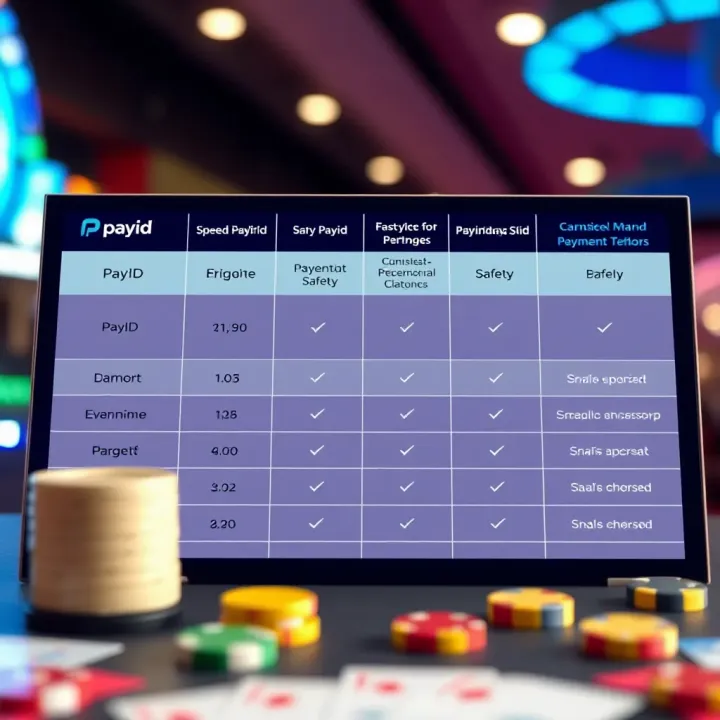
When you're picking a payment method for online casinos, it's worth comparing PayID against common options like credit cards and e-wallets. Each method comes with its own blend of fees, speed, security, and overall convenience. Knowing how PayID stacks up can save you money and hassle, especially when timing your deposits or withdrawals.
Credit and debit cards, such as Visa and MasterCard, often charge processing fees for casino deposits or withdrawals. These fees can add up, especially with larger transactions. On the flip side, PayID typically comes without extra fees for transfers, making it an economical choice. Speed-wise, PayID offers nearly instant deposits because funds go directly from your bank account to the casino. Conversely, card withdrawals can take a few business days to show up due to additional verification steps.
Security also plays a key role. Credit cards expose your card number and expiration details, which could be risky if the casino’s data security isn’t top-notch. PayID simplifies this by letting you send money using just your email or phone number linked to your bank, reducing the sharing of sensitive bank details. And since transactions go directly through your bank, you benefit from their built-in fraud protections.
Credit and debit cards remain the most widely accepted and familiar payment methods across online casinos. Many players prefer them out of habit and trust. That said, card payments may require manual input of details every time, which can slow down the process.
PayID offers a smoother user experience if your bank supports it. You don't have to enter long card numbers or worry about expiry dates. Just a quick identification like an email means your deposit goes through fast and hassle-free. While PayID is growing in popularity, it's still not accepted everywhere, which is an important consideration if you favor flexibility.
E-wallets like PayPal, Neteller, and Skrill let you fund your online casino account without direct bank involvement. They often include handy features like instant funding and quick withdrawals but can impose transaction limits or fees depending on volume and location.
PayID sits somewhere between bank transfers and e-wallets. Its main convenience is that it ties directly to your bank account without needing a separate e-wallet setup. This means you avoid juggling multiple accounts. However, PayID might come with caps on how much money you can send in one go, set by your bank.
One hurdle for PayID is its regional limitation. It’s mainly used and accepted in countries like Australia and New Zealand. In contrast, e-wallets like PayPal have broader acceptance globally, including many U.S. casinos. So, if you’re playing at international sites, your payment method options widen considerably with e-wallets.
That said, PayID’s growing adoption among U.S.-based banks is pushing more online casinos to accept it. But if your casino doesn’t support PayID, you’ll have to fall back on cards or e-wallets. It’s always good to check beforehand because acceptance can vary widely, especially for newer payment options.
Bottom line: PayID can shine with lower costs and speed for bank-linked transactions, but you might face acceptance limits. Credit cards and e-wallets still dominate in reach and flexibility, so choose the method that fits your playing habits and location best.
Explore using PayID for online pokies in Australia 🎰. Learn how it works, benefits, security tips, and legal considerations for Aussie players 🦘💳.

🎰 Discover the best online casino games in Australia, learn legal rules, payment options, top sites, and smart strategies to boost your chances and enjoy safely!

🎰 Discover RocketPlay Online Casino's pokies, table games, bonuses, secure payments & top-notch support. Everything needed for a fair go at online gaming!
🎲 Discover the best low deposit PayID casinos that make gaming affordable & easy! Learn how PayID works, tips for smooth transactions, plus pros & cons of using it.
Based on 6 reviews